Culture · 8 min read
The Golden Generation That Didn't Win: Belgium's Decade Reconsidered
Hazard, De Bruyne, Lukaku, Courtois — the most talented Belgian squad ever assembled left without a major trophy. What did they actually produce?
Futbol Shop Editorial · April 5, 2026
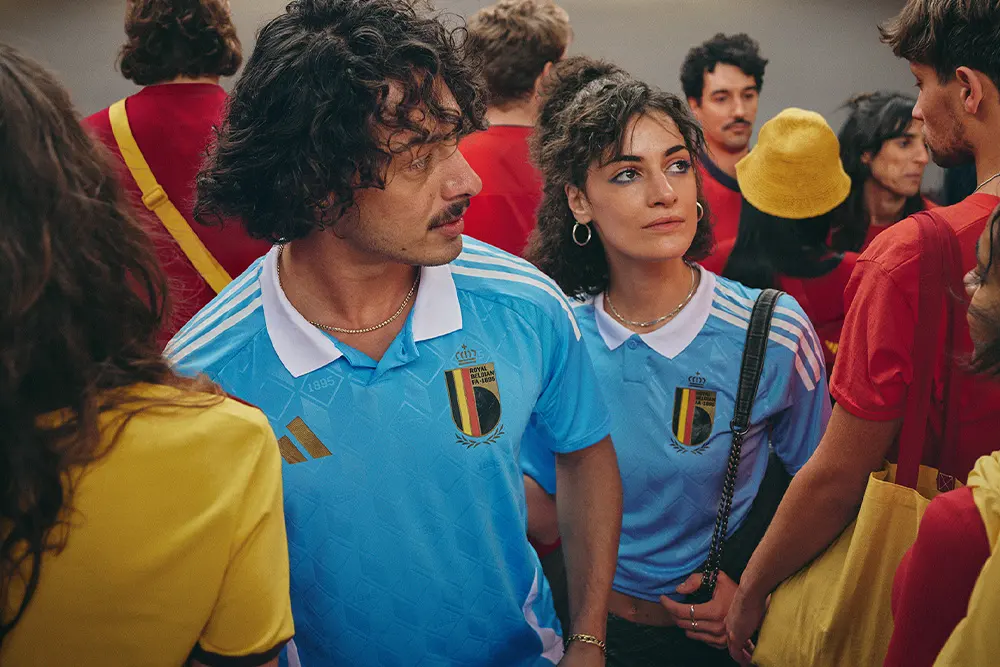
Belgium's so-called golden generation — broadly the squad that ran from roughly 2014 through 2022 — was the most talented Belgian football team ever assembled. Eden Hazard at his Chelsea peak, Kevin De Bruyne in the form that defined Manchester City's dominance, Romelu Lukaku as one of Europe's most consistent strikers, Thibaut Courtois settling into a generation-defining goalkeeper. The squad was a fixture in the FIFA top-five world rankings for years. It did not, in the end, win a major tournament.
Now, with most of that generation having retired or aged into senior roles, it's possible to assess what they actually produced — for Belgian football, for the players' clubs, and for the broader European game.
The peak — 2018 World Cup
Belgium's third-place finish at the 2018 World Cup remains the country's best ever tournament result. The defining moment — the comeback against Japan in the round of sixteen, then the dismantling of Brazil in the quarterfinals — was as close as the generation came to genuine greatness. The semifinal loss to France was narrow, and the squad's performance throughout was technically excellent.
The argument against the 2018 squad — that it never quite reconciled the De Bruyne-Hazard-Lukaku attacking trio with a defensively coherent structure — has merit. France's defensive discipline in the semifinal exposed a structural fragility that Belgium never fully resolved across the cycle.
The clubs the players defined
The generation's club football is where its real legacy sits. De Bruyne at Manchester City was the central organising player of the most successful English club run in modern history. Hazard's Chelsea won two Premier Leagues and a Champions League, with Hazard as the team's defining attacking force. Courtois has been a fixture in Real Madrid's recent Champions League runs. Lukaku produced career seasons at Inter Milan that anchored a Serie A title and a Champions League final.
If you measure the generation by collective club trophies rather than international ones, the picture changes significantly. Few generations of any national team have won as much at club level.
The Belgian league effect
Domestically, the impact has been more complicated. The Pro League continues to produce talent at a remarkable rate for a country of eleven million people, and the academy systems at Anderlecht, Genk, and Standard Liège deserve serious credit for developing the spine of the golden generation. But the league itself has not capitalised commercially — it remains a feeder league, with its best players moving to the major five European leagues by their early twenties.
Whether the next Belgian generation will be sustained by the same academy infrastructure is an open question. The financial gap between the Pro League and the Premier League continues to widen, and the youth investment that produced the golden generation has not been matched in the last several years.
What 'failure' actually means in international football
The narrative that Belgium 'failed' to win a tournament is partly a function of how international football is commercially structured. Major tournaments happen every two years, knockout football has a high random-noise component, and even dominant generations like Spain's 2008-2012 squad produced their three trophies across an unusually compressed window. The notion that a generation of talent must convert to a specific tournament trophy in order to be considered successful is largely a media construct, not a serious analytical framework.
By any reasonable measure of football quality, the Belgian golden generation produced consistently excellent football for nearly a decade. The collective body of work — the World Cup semifinal run, the Euro 2020 quarterfinal against Italy, the dozens of marquee club performances by individual players — is more substantial than the 'no trophies' narrative captures.
What comes next
The current Belgian squad is in genuine transition. Several golden-generation players have retired internationally; others are aging out of their peak. The new generation — players in their early twenties, drawn from the same Anderlecht and Genk academy pipelines — is technically promising but has not yet faced the pressure tests that define a tournament-ready squad.
Whether Belgium produces another golden generation in the next decade is partly a question of whether the country's football infrastructure has continued to invest at the level that produced the last one. The early signs are mixed, but the academy pipeline that produced De Bruyne, Hazard, and Lukaku does not vanish overnight. The next cycle is likely to surprise either upward or downward — and either outcome will partly retroactively define how the golden generation is remembered.